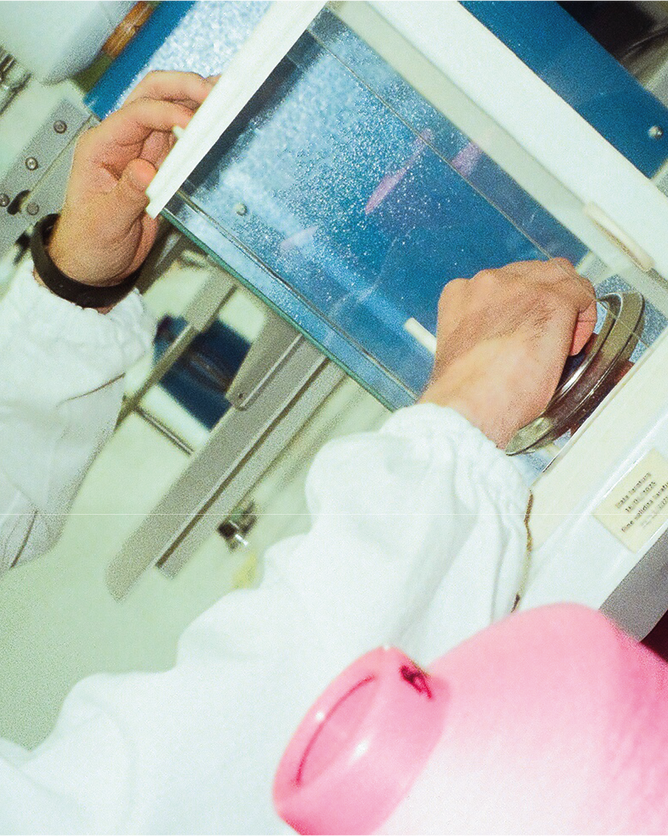
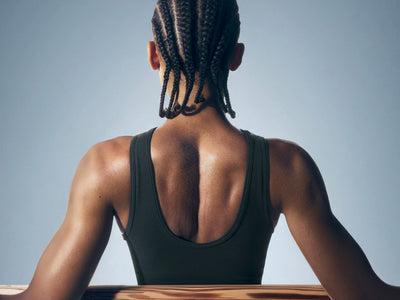


Inside our in-house lab for thermal testing.
Research. Measurement. Protection.
There is a sealed door at AREAS, our headquarters in Asola, behind which the temperature is held at a constant minus twenty degrees. It does not vary with the season or the weather outside. We build that winter ourselves, precisely so that nothing depends on the forecast.
A person walks in wearing what we have made, and a thermal camera reads them.
What comes back is not a number but a map. Heat held at the core, heat lost at the extremities, and between the two a line that shifts according to what the body is wearing. That line is where a base layer is effectively decided.
This matters because the human body does not lose heat evenly, and a garment that treats it as though it does will always be a compromise. The lower back, the kidneys and the chest need to retain warmth. The underarms and the spine need to release it, because a body that overheats and then cools is in more trouble than a body that was never quite warm enough. Sweat that has nowhere to go becomes a conductor, and at minus twenty a conductor against the skin is the fastest way to lose everything you have gained.


Natyon Biomorph Turtleneck Thermal Jersey
Regular price
1.508,00 kr
Regular price
0,00 kr
Sale price
1.508,00 kr
(Liquid error (snippets/price line 115): Computation results in '-Infinity'% OFF)
Unit price
per


Natyon Biomorph 3/4 Thermal Pants
Regular price
1.291,00 kr
Regular price
0,00 kr
Sale price
1.291,00 kr
(Liquid error (snippets/price line 115): Computation results in '-Infinity'% OFF)
Unit price
per
The thermal camera shows us exactly where those thresholds sit.
What it does not do is confirm that a garment works. That is the distinction we care about. A reading is not evidence of a finished product; it is the beginning of one. Density, ventilation and structure are drawn directly from what the camera sees, and then the garment goes back into the chamber and is read again. The process repeats until the map holds steady under the conditions we have set.
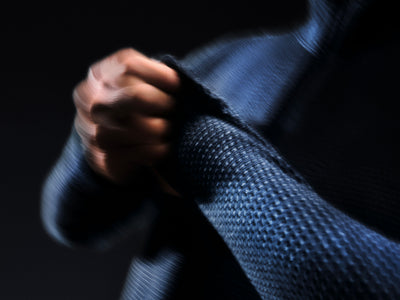
Our construction method is what makes this possible in practice. Because our garments are knitted seamlessly on circular machines, the structure of the fabric can be varied across the body within a single piece: denser where heat must be retained, opened up where it must be released, all without a seam or a panel join anywhere near the areas that matter. The thermal map tells us where the boundaries lie, and the machine builds the garment to match them.
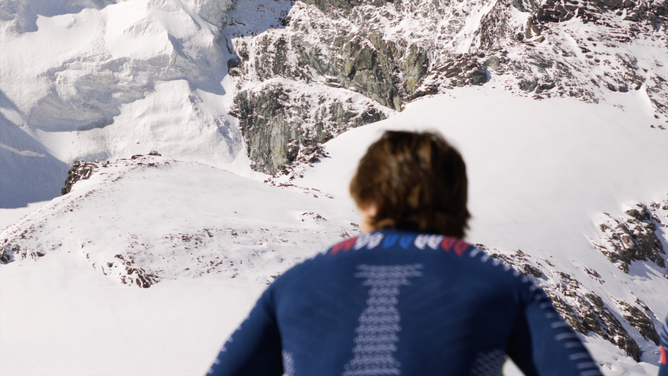
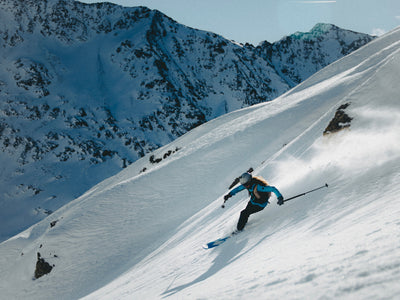
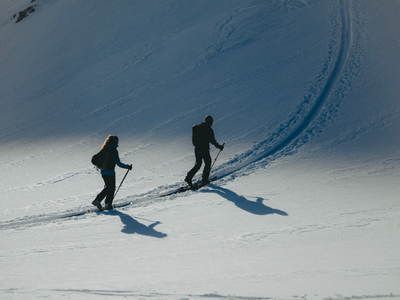
Some of our most demanding work has come out of this room. The Biomorph range, our highest specification for winter skiing and worn by athletes competing for national federations, required an unusually complex combination of yarns and technologies to reach the result the readings were asking for.
There is a broader principle here, and it is the same one that governs the Monsoon Chamber next door. We could rely on external laboratories and standard thresholds, and we would pass them. We built our own facility so that we could set conditions harsher than the standard requires, and so that the testing happens in the same building as the design, the fibre research and the production.
Winter is not a condition we wait for. It is one we hold at minus twenty, behind a sealed door, all year round.
"We build the winter ourselves, so that nothing is left to the forecast."
Related articles


#Headquarters
Is it really possible to reduce your impact on the planet as a textile company?