







Inside the processes that turn our production waste back into product
Back in June, on World Environment Day, we made ourselves a promise: to look harder at what we are actually doing, and what we intend to do next, to lessen our footprint as a textile company.
This documentary is the result of that promise.
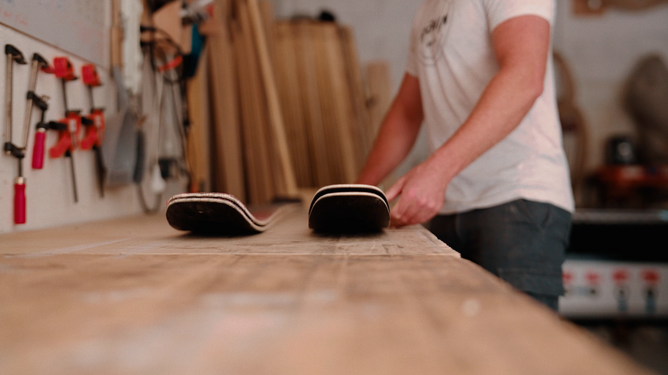
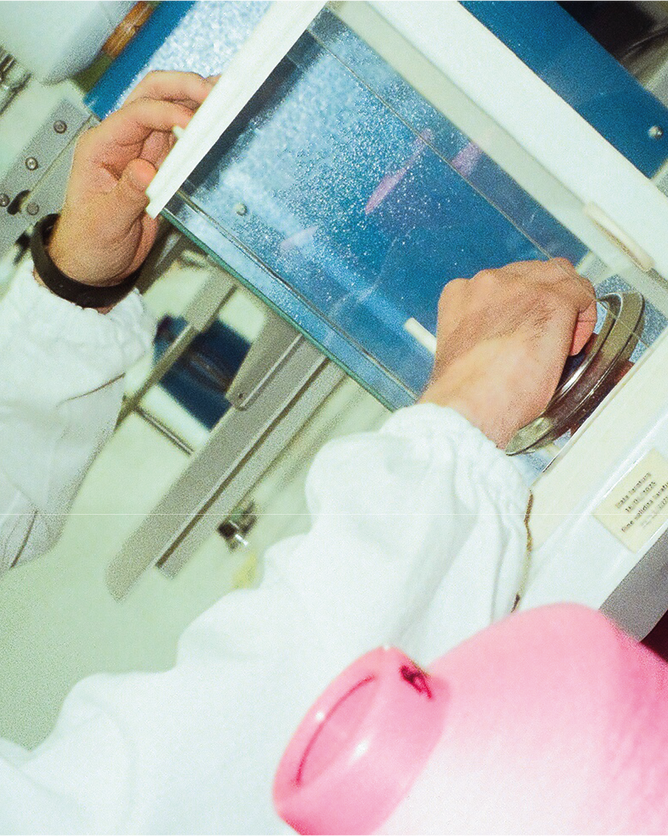
Rather than publishing a statement, we opened the doors of AREAS, our facility in Asola, and filmed the work as it happens. The fibre research. The production floor. What comes out of the machines, and what happens to the material that never becomes a garment.
Three areas define our approach.
Materials
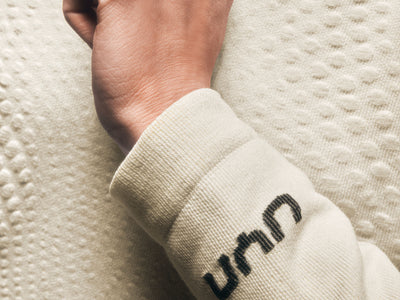
We continue to increase the share of natural fibres across our collections. Kapok, the lightest natural fibre in the world, grows so abundantly that it requires no cultivation or irrigation. Eucalyptus cellulose is processed in a closed loop where water and enzymes are fully recovered. Ariacel, derived from wood pulp filaments, biodegrades within months of the end of its useful life. Alongside these sit Natex, Biolight and Flexicorn. Materials grown rather than synthesised.
Using natural materials is not only better for the planet. It is also considerably better for the body that wears them, which is a point we will return to.


Antarctica Padded Jacket
Regular price
€ 419,30
Regular price
€ 599,00
Sale price
€ 419,30
(30% OFF)
Unit price
per


Gemini Reversible Jacket
Regular price
€ 419,30
Regular price
€ 599,00
Sale price
€ 419,30
(30% OFF)
Unit price
per
Waste
Like every company in this industry, we generate tonnes of textile waste each year. We recover as much of it as we can.
Much of that work happens in partnership with local cascamifici, the mills that collect textile waste and direct it to the right destination. A cascame is, as the name suggests in Italian, something that falls from the machine: the offcut left over from processing yarn or fabric.
Some of that material returns as Airnest, our own insulation. As our circular machines knit, they draw in the offcuts and expel them into purpose-built chambers. We collect the waste, compact it, shred it into fine particles and bind it with wadding. What comes out is an insulating layer with thermoregulating properties, made from the same bio-based yarns the garments themselves are built from. It goes straight back into our jackets. Roughly half of the textile waste we produce returns as product this way instead of ending up somewhere else. Some of the rest is compressed into panels used in construction.
But the most effective way to deal with waste is not to produce it in the first place.
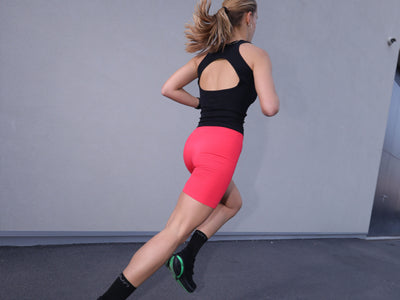
That is what our patented seam constructions are for. A conventional top is knitted as three separate tubes: one for the body, one for the sleeve, one for the collar. Every tube leaves offcuts behind, and every tube adds yarn, machine time and electricity. Our construction knits the body and the sleeve as a single piece. One tube instead of three, which means fifteen to twenty per cent less production waste, alongside savings in yarn, time, machine wear and power consumption.
It also performs better. The seam wraps around the back rather than cutting across the shoulder, giving more mobility than a standard raglan. The environmental gain and the technical gain arrive together, not in competition.
Awareness
Progress here comes from the major decisions and the small daily habits alike. Both are visible in the film.
A direction, not a destination
None of this is presented as a finished achievement. It is a direction of travel, and we think it is more useful to show the work honestly than to summarise it in a claim.
There is one further point worth making. A positive effect on the places we live in matters enormously, but so does the effect on the bodies of the people who wear what we make. Natural fibres are gentler against the skin and better at regulating moisture and temperature. The two objectives are not separate. They are the same objective, approached from different sides.
Watch the full documentary on YouTube.
"Half of what our machines discard becomes raw material for a second time. We want to have a positive impact on the places we live in, but above all on the bodies of the people who wear us."
Related articles


#Headquarters
Is it really possible to reduce your impact on the planet as a textile company?