

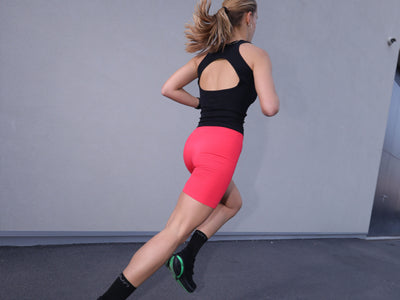





A night on the elimination circuit in Milan, and what it asks of the kit
Milan, Saturday night. Knockout format, closed circuit, no room to settle in.
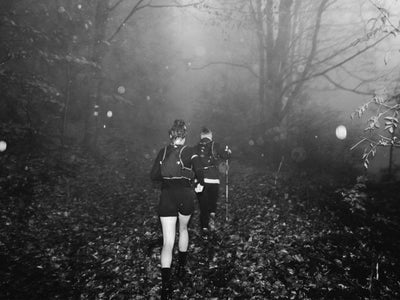
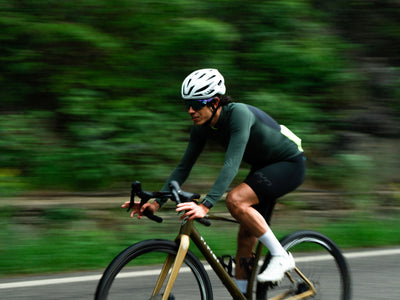
Most races give you time. Time to find a rhythm, to sit in the pack, to save something for later. Policrit gives you none of it. The format is elimination: a purpose-built circuit through the city under floodlights, and lap after lap the field gets smaller. There are no heats, no pacing strategy and no second chances. You commit from the gun or you are out.
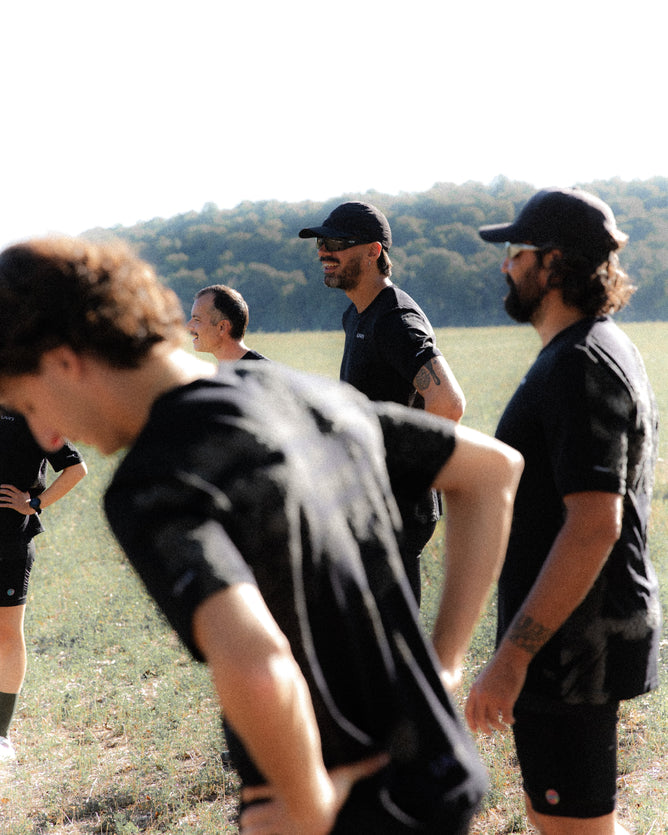
We brought a few of our runners to take part.
A format that changes the effort
What makes Policrit interesting is not simply that it is fast. It is that the shape of the effort is entirely different from anything on a track or a road course.
A steady race allows the body to settle into a pattern. Heart rate stabilises, breathing finds a rhythm, the temperature the body reaches becomes something it can manage. An elimination race removes that possibility. Every lap brings a surge as the field fights to avoid the cut. The effort spikes, drops fractionally, then spikes again. Heat builds quickly and never gets the chance to clear. The body is expected to recover while still moving at pace.
For anyone designing performance kit, this is a demanding set of conditions, and a genuinely useful one.


Kymra Running T-Shirt
Regular price
CHF 69.00
Regular price
CHF 0.00
Sale price
CHF 69.00
(Liquid error (snippets/price line 115): Computation results in '-Infinity'% OFF)
Unit price
per


Kymra Running Short Tights
Regular price
CHF 65.00
Regular price
CHF 0.00
Sale price
CHF 65.00
(Liquid error (snippets/price line 115): Computation results in '-Infinity'% OFF)
Unit price
per
What the kit has to do
In a race of repeated surges, the failures are not dramatic. They are small and they accumulate.
Moisture that is not carried away quickly enough sits against the skin and stays there, because there is no easy section in which it might dry. A seam positioned across a point of movement becomes an irritation by the fourth lap and a problem by the tenth. A garment that shifts when the pace jumps is a distraction precisely when attention is most needed elsewhere.
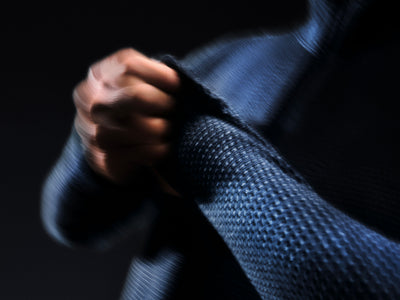
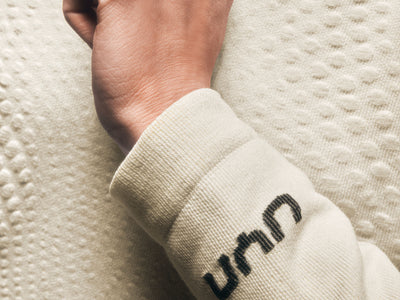
Our approach is to eliminate these variables at the point of construction rather than to compensate for them later. Our garments are knitted seamlessly on circular machines, in a single piece, which means there are no seams positioned where the body flexes. Ventilation zones are built into the knit structure itself and placed where heat gathers first, rather than where they might look purposeful. The natural fibres we work with, including Natex and Coolth_SL, move moisture away as it forms and dry considerably faster than conventional nylon.
None of this is visible when it is working. That is rather the point.
Why we turn up to nights like this
We test everything at AREAS, our facility in Asola. The Monsoon Chamber, the fibre research, the controlled trials: all of it happens under one roof and all of it is necessary.
But a controlled test can only tell you what you thought to measure. A night like Policrit, with a format we did not design, on a circuit we do not control, in conditions nobody planned for, tells you the rest. It is the difference between knowing a product performs and watching it perform when everything is happening at once.
There is a broader point here too. Events like Policrit are where running culture is actually taking shape at the moment. Not in a stadium, but in the middle of a city, at night, with a crowd close enough to touch and a format that needs no explaining. The sport is changing, and it is changing in places like this.
It was good to be part of it, and good company to be in.
Thanks to the Policrit team for having us.
"Testing in our own facility tells us a great deal. A night like this tells us the rest."
Related articles


#Headquarters
Is it really possible to reduce your impact on the planet as a textile company?